
Calm the system first.Then open the body.
A body that feels safe lets go on its own. So we calm the system first, then stretch, and the change holds.
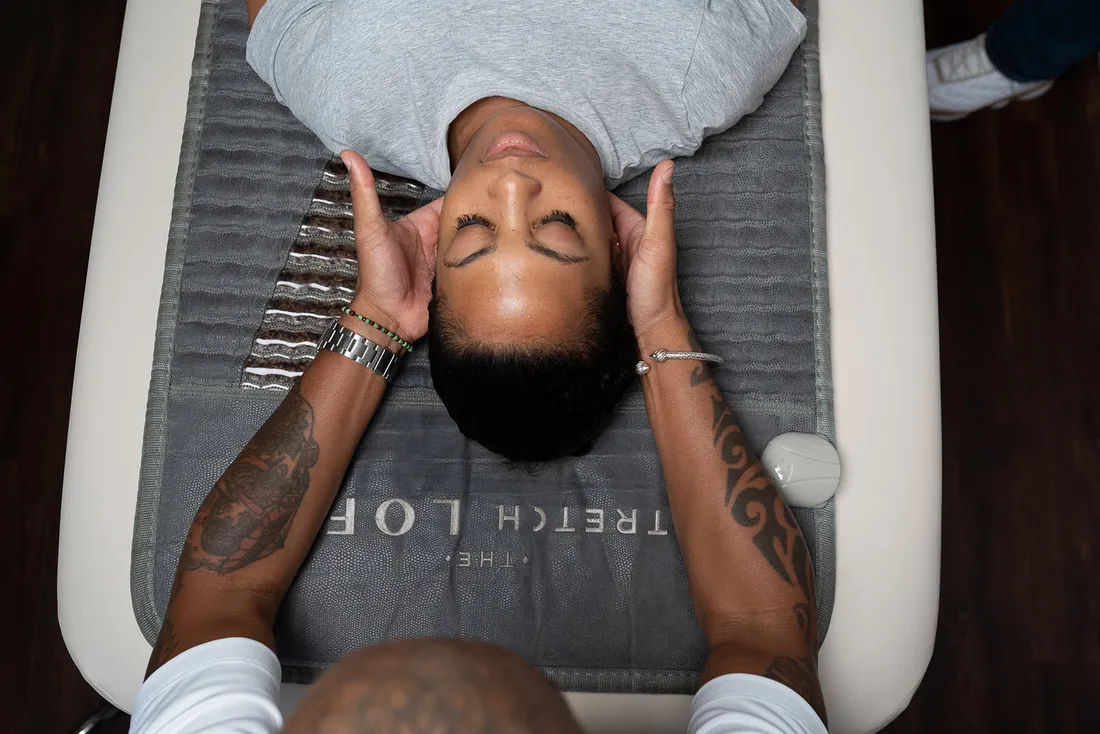
Tightness is your body protecting you.
When you are carrying a heavy load (work, family, training on top of it all), your nervous system keeps certain muscles switched on to protect you. That bracing is why the same two spots never loosen, no matter how much you stretch, roll or get worked on.
You cannot willpower a guarded muscle into letting go. It releases when the nervous system reads the situation as safe. That is the whole point of our method: we work with the system holding the tension first, then the tissue that is sore.
Breath is the one input that talks directly to the nervous system. We use it as the remote control, then open the body while it is actually listening.
What people come in carrying
- Hips, shoulders, neck and lower back that tighten right back up
- Stress, grief and pressure the body has been carrying: a jaw and shoulders that never fully drop
- Poor, restless sleep: a body too switched on to wind down
- Desk days, long drives and training load quietly wearing down how you move
Four movements, always in this order
Tightness is usually your body guarding under stress. So every session runs in the same order, and the release holds.
- 1
Assess
We map your stress, sleep and energy, and where your body is actually holding. A read on what your system is doing today.
- 2
Downshift
Long, guided exhales move you out of fight-or-flight. Breath is the remote control; a calmer system stops guarding.
- 3
Release
Slow, breath-paced, hands-on assisted stretching on the patterns holding your tension, working with your body instead of against it.
- 4
Integrate
What we found, why it is there, what changed today, and a plan for keeping it. No pressure, no contract.
Your first visit
Every new client starts with an hour that puts the method to work on you: an intake on stress, sleep and where you hold tension, a breath-led downshift, hands-on reset work, and a written plan you keep. Wear gym or yoga clothes and clean socks.
Questions about the method
What happens on my first visit?
Your first visit is a full hour: an intake and assessment, a breath-led downshift, guided hands-on reset work, a short integration, and a written plan you keep.
I feel tight everywhere and don't know where it starts. Can I still book?
Yes. Many people tell us it is "all over" or "all of the above". Your first visit starts with an assessment, so you do not have to work out where it starts on your own. Most people find it in the hips, shoulders, neck and lower back.
What if my tension is emotional as well as physical?
That is common: most people who request a first visit tell us it is a mix of both. Stress, grief and pressure often show up as tension in the hips, shoulders, neck and jaw. We work with the body and the breath. We are not a substitute for counseling or mental-health care.
Is stretch therapy the same as massage?
No. Massage works the tissue while you lie passive. Stretch therapy here is assisted stretching paired with breath-led nervous-system work, aimed at changing how your body holds tension rather than only feeling good for an hour.
Does it hurt?
No. The work is slow and paced with your breath, and your practitioner stays within what your body allows on the day.
What should I wear?
Gym or yoga clothes you can move in, and clean socks. Come hydrated and, if you can, not straight after a heavy meal.
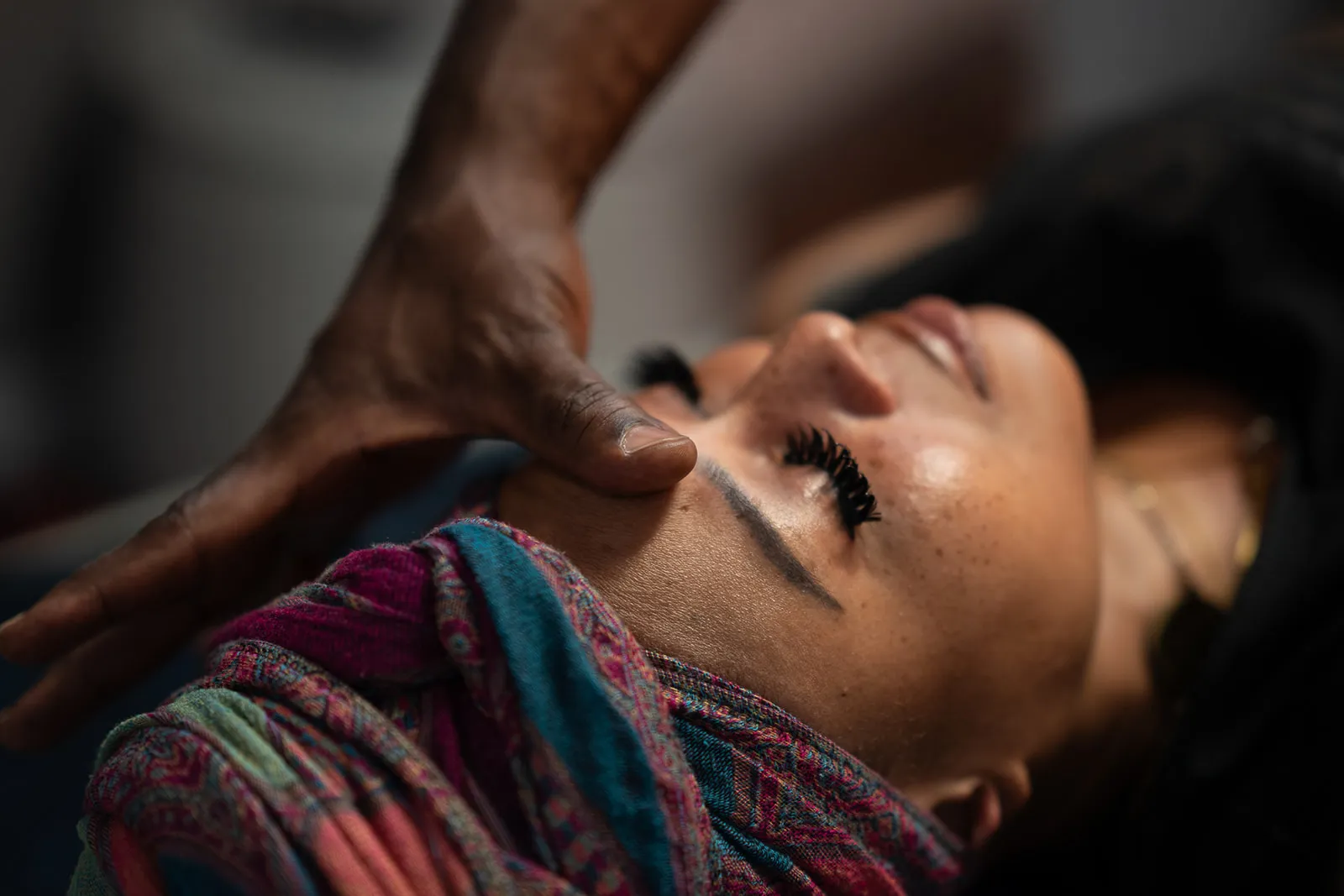
Book an hour for yourself.
Prefer a hand? Call either studio and we will book it with you. Free to reschedule up to 24 hours before.